Watercolor Floral PNG Bouquet 1: A Practical Guide for Creatives and Small Business Owners
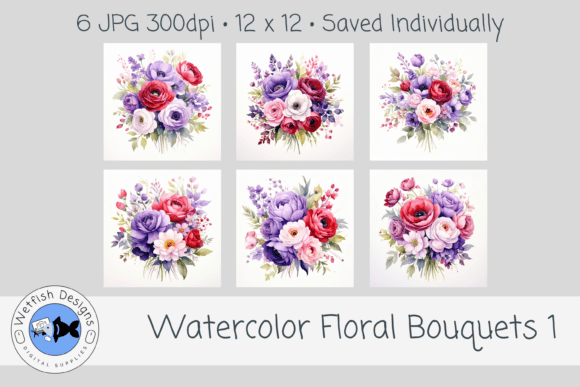
Watercolor Floral PNG Bouquet 1, part of the Watercolor Floral Bouquets collection by Wetfish Designs, offers six high-resolution, hand-painted flower arrangements. Each 12x12 inch image is delivered as an individual JPG at 300 DPI, making it a versatile asset for digital and print projects. This article focuses on how to integrate this resource into your creative workflow, from preparation and tool compatibility to long-term asset management and project execution.
Understanding the Asset and Its Place in Your Workflow
Before diving into specific uses, it helps to understand what you are working with. These watercolor bouquets feature layered blooms in blush pink, lavender, purple, and coral, paired with delicate greenery and natural brush texture. The style is soft, romantic, and feminine, which makes it suitable for wedding materials, stationery, branding, and seasonal designs. Because the files are flat PNG-like JPGs (with full backgrounds unless otherwise specified), you will need to consider how to isolate elements or use the compositions as they are.
In a typical creative process, assets like these serve as decorative layers, background art, or focal points. Knowing their visual properties beforehand helps you decide where they fit best—saving time during the design phase. For example, the natural brush texture adds a handcrafted feel that works well for physical products like cards and wall art, while the color palette blends easily with pastel or neutral layouts.
Before You Start: Preparation and Organization
Effective use of any digital asset begins with preparation. Here are practical steps to take before you open your design software:
- Review the files: Open each bouquet image to understand its composition and dominant colors. Note which bouquets have more open space (useful for adding text) and which are denser (better as standalone art).
- Organize your folder: Create a dedicated folder on your computer or cloud storage for this collection. Add subfolders by intended use—for example, "Wedding," "Planners," "Printables," "Social Media." This reduces search time later.
- Check software compatibility: JPG files at 300 DPI are universally accepted in most design programs: Adobe Photoshop, Illustrator, Canva, Procreate, Affinity, or even Microsoft Publisher. Ensure your software can handle 12x12 inch canvases.
- Create a color palette extract: Use a tool like Adobe Color or Canva's palette generator to pull key colors from the bouquets. This helps you select coordinating fonts, backgrounds, and other elements without guesswork.
Integration with Common Design Tools and Platforms
How you use Watercolor Floral PNG Bouquet 1 depends on your preferred software. Below are specific workflows for the most popular platforms:
Canva
Since Canva supports JPG uploads, you can drag the bouquet images directly into your designs. If you want to remove the background (to layer the flowers over other backgrounds), try Canva Pro's Background Remover or use a third-party tool before importing. For quick projects like invitations or social media posts, place a bouquet on a pastel background, adjust the transparency slightly, and add text over the softer areas. The 12x12 size means you can scale down without losing quality; avoid enlarging beyond 150% to maintain sharpness.
Procreate
For iPad users, import the JPG as a new layer. Use the "Alpha Lock" or clipping masks to recolor individual petals if needed. The watercolor texture blends well with Procreate's wet brushes—try adding subtle splatters or additional wash layers to extend the set. Use the bouquet as a base for hand-lettering overlays or as a reference for painting your own variations. Because the original file is high resolution, you can zoom in to trace fine details.
Adobe Photoshop and Illustrator
In Photoshop, use the Magic Wand or Color Range tool to select and delete the background if your project requires transparency. You can also apply blending modes like Multiply to integrate the bouquet with textured paper backgrounds. In Illustrator, embed the JPG and use Image Trace to convert it into vector shapes (though the watercolor texture may simplify). For print production, ensure your document is at least 300 DPI and convert to CMYK if needed.
Practical Implementation in Specific Projects
Here are concrete examples of how to use these bouquets in real client or personal work. Each scenario includes planning, execution, and finishing tips.
Wedding Stationery and Invitations
Planning: Choose bouquets with softer clusters that work well as borders or corner accents. The blush and lavender tones suit spring or garden weddings.
- Execution: Open a 5x7 inch canvas at 300 DPI. Place a bouquet in the top left and bottom right corners. Scale to about 3 inches wide. Add a thin gold line border and elegant serif text in the center. For the RSVP card, use a single bouquet as a full background with reduced opacity (20–30%) behind the text.
- Finishing: Export as a print-ready PDF with 0.125 inch bleed. If printing at home, use a quality matte paper to complement the watercolor feel.
Digital Scrapbooking and Planners
Planning: Organize a set of overlays or stickers by color. Use the bouquet as a large background element on a 12x12 digital page.
- Execution: In your scrapbooking software, import the bouquet and set the blending mode to Multiply if you want it to appear painted on the background paper. Alternatively, keep it opaque and layer journal cards, photos, and embellishments around it. For planners, shrink a bouquet to fit a weekly spread header—about 2x2 inches—and adjust saturation to match your ink colors.
- Finishing: Save as a PNG if you isolate elements, so the transparency makes layering easier for future use.
Product Packaging and Small Business Branding
Planning: Identify where the bouquet can serve as a brand asset—on product labels, hang tags, or social media templates.
- Execution: For soap or candle labels, size the bouquet to fit a 2x4 inch area. Use it as a background pattern by tiling a cropped section of the foliage. For Instagram posts, create a template with the bouquet as a lower-third graphic, then overlay your product photo and brand name. Because the colors are consistent, your brand palette remains cohesive across channels.
- Finishing: Create a digital style guide that lists the bouquet file names and suggested backgrounds (e.g., cream, pale gray, soft sage). Share this with team members to maintain consistency.
Quality Control and Consistency
When using pre-made assets like Watercolor Floral PNG Bouquet 1, establishing quality control steps prevents rework and maintains a professional look.
- Check resolution early: Always confirm your output resolution. If you are printing large wall art (e.g., 24x24 inches), you may need to scale up using software like Photoshop's "Preserve Details 2.0" interpolation. For most digital uses, the original 300 DPI at 12x12 is sufficient.
- Test color accuracy: Watercolor images can look different on screen versus print. Soft proof your files in your design software (using your printer's ICC profile) before sending to a commercial printer. If printing at home, do a test on the actual paper stock.
- Maintain a consistent look across a set: If you use multiple bouquets from the collection in one project, ensure they share the same lighting and contrast. Adjust levels or curves if one image appears washed out next to another. A simple gradient map adjustment can also tie them together.
- Manage file versions: Keep the original files untouched. Save copies with your edits in a separate "Working" folder. This allows you to revert if needed.
Long-Term Usage and Asset Building
A single collection can serve you for years if you treat it as a foundational resource. Here is how to maximize its longevity:
- Build a library of variations: Create different cropped versions, recolored versions, and isolated elements (e.g., a single rose or a sprig of lavender). Save these as separate PNG files with transparent backgrounds. This transforms six bouquets into dozens of reusable assets.
- Use for recurring seasonal campaigns: The floral palette works for Valentine's Day, Mother's Day, Easter, spring promotions, and even autumn events if you shift the hues toward warmer tones. Create a master folder with these seasonal variations ready.
- Incorporate into client templates: If you design for clients, store the bouquets in a master template file. For example, a wedding invitation template where you can swap the bouquet image for a different one from the set. This reduces turnaround time.
- Document your process: Write a brief guide for yourself or your team on how to use the collection: which tools to use for background removal, suggested blend modes, and default sizes. This ensures consistency even if someone else works with the files.
Practical Observations for Creators and Entrepreneurs
After using watercolor assets in many projects, a few observations stand out:
- Transparency is a time saver: If your workflow demands frequent layering, consider converting JPGs to PNG with transparent backgrounds. Batch process this using tools like Remove.bg or Photoshop actions. It takes upfront time but pays off.
- Pair with solid typography: Watercolor bouquets have organic edges—balance them with clean, modern fonts (sans serif or thin serif) to avoid visual clutter. The contrast between soft art and structured text feels intentional and professional.
- Use sparingly for high-impact results: One large bouquet can act as a hero image on a card or flyer. Using multiple bouquets on the same page may overwhelm the composition. Let the art breathe.
- Mind the background: Because JPGs typically have a white background (unless otherwise stated), ensure your design background is compatible. Either remove the white or use a background the same shade to blend.
Final Workflow Integration Tips
To smoothly incorporate Watercolor Floral PNG Bouquet 1 into your regular routine, consider these process-oriented steps:
- Audit your current project queue: Identify where floral elements could upgrade existing projects—an upcoming wedding invitation, a seasonal product label, or a series of social media graphics. Prioritize those first.
- Set up a template in your main design tool: For example, create a 5x7 card template with a placeholder layer for a bouquet. This makes future projects a matter of dropping in a new image.
- Test one bouquet thoroughly: Before committing to the whole set, run a single image through your typical export and print process. Check quality, color, and scalability. This small test informs how you handle the rest.
- Create a shared resource pack: If you collaborate with others, package the files along with a short usage note (license terms, suggested backgrounds, and example compositions). This reduces questions and ensures consistent use.
Watercolor Floral PNG Bouquet 1 provides a focused set of high-quality floral compositions. By preparing files appropriately, understanding tool-specific workflows, and applying consistent quality checks, you can integrate these assets into your design process without friction. The collection's strengths lie in its cohesive palette and hand-painted texture—leveraging those intentionally will yield professional, polished results across a wide range of creative and commercial projects.